

【AI Industry Alert】Anthropic just hit $30 billion in annual revenue, officially surpassing OpenAI’s $24 billion. The company founded by former OpenAI employees grew 30x in just 15 months, with training costs at only one-fourth of its rival. Silicon Valley’s most dramatic comeback story is rewriting the AI industry landscape.
A historic moment!
Right now, a financial report that will go down in business history has dropped like a depth charge, completely shattering OpenAI’s growth myth.
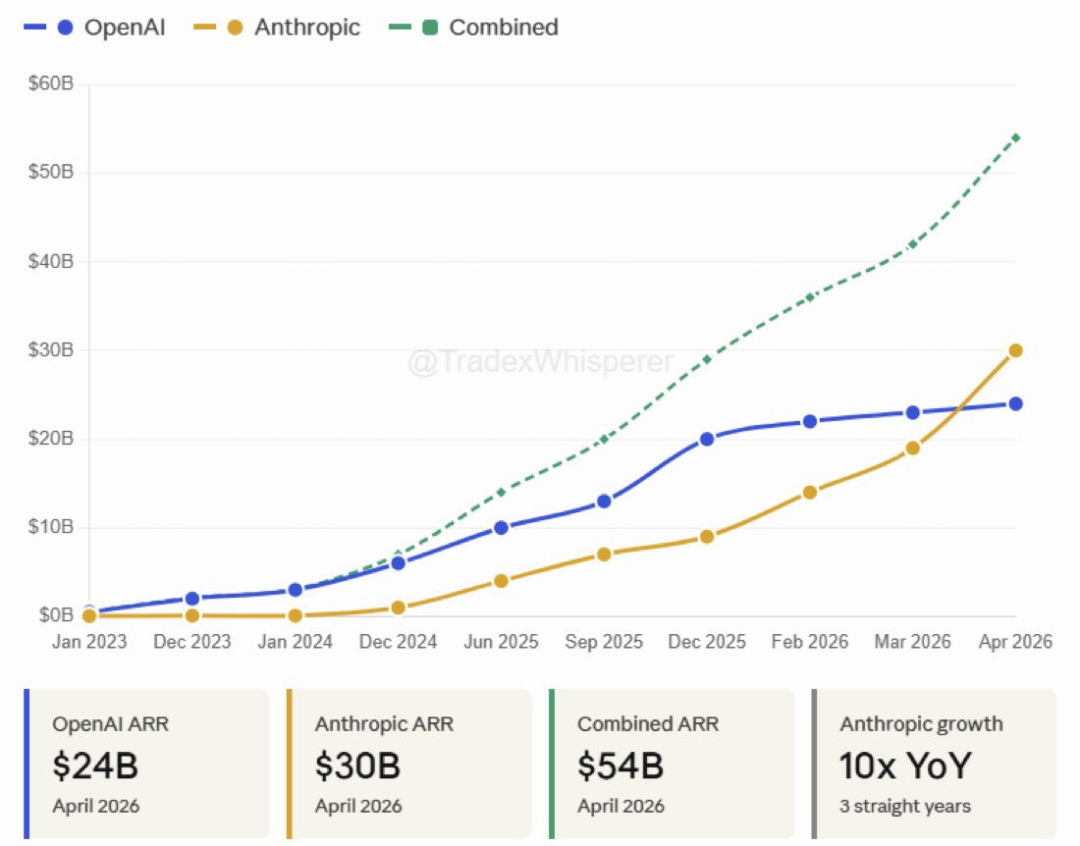
The historic moment has arrived. Anthropic, born from OpenAI’s own team, has officially overtaken its former parent. Annual recurring revenue (ARR) has soared to $30 billion, completely crushing OpenAI’s $24 billion.
According to the Wall Street Journal, a financial document that shocked the entire tech industry was just leaked: Anthropic’s annual recurring revenue has broken through $30 billion.
Back in early 2025, Anthropic’s ARR was only $1 billion. By April 2026, it officially crossed $30 billion.
In just 15 months, going from $1 billion to $30 billion at a terrifying speed, this is something never seen before in business history. The only comparable growth curve was Meta’s early days.
This company that just made history was founded in 2021 by former OpenAI employees. It was once seen as a small player next to OpenAI.
But the AI industry is changing fast.
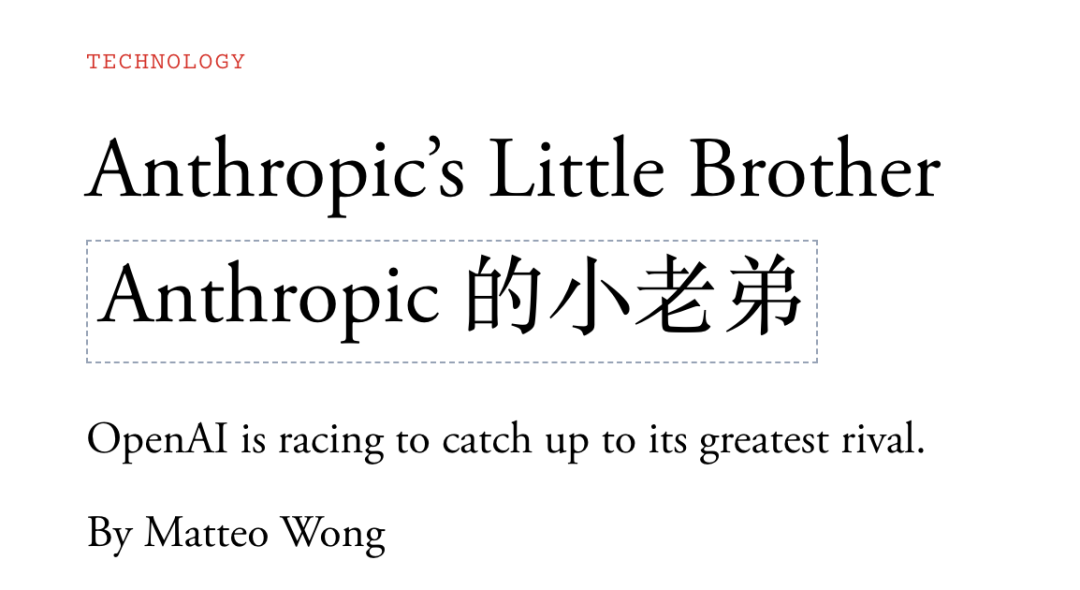
Right now, the media calls Anthropic OpenAI’s “little brother.” But in terms of revenue growth and valuation, the two are already neck and neck. Some even say Anthropic’s business model is more solid.
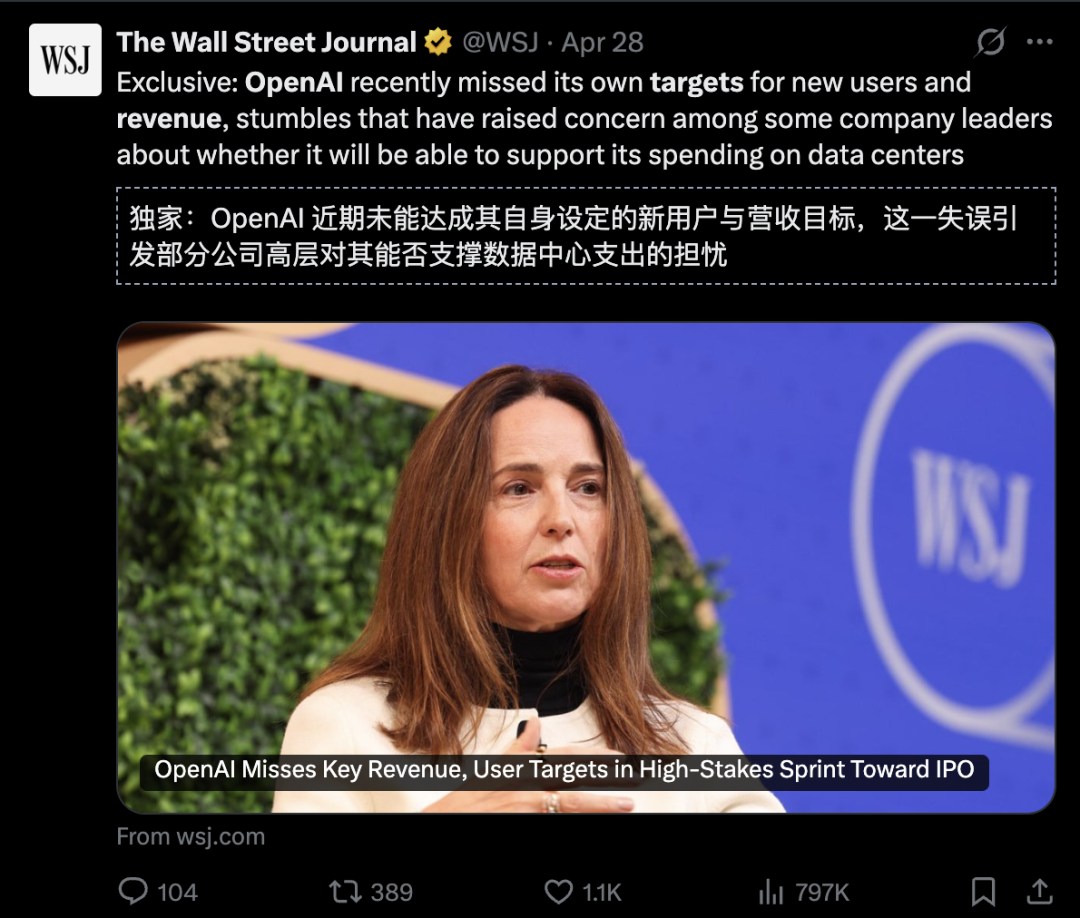
What makes it even more striking is that on the same day, the WSJ also dropped another bombshell: OpenAI failed to meet its internal target of 1 billion active users, and its CFO may have to pay out $60 billion in stock compensation. Insiders revealed there are serious disagreements between the CEO and CFO.
The $122 billion valuation is in danger, and the IPO plan is on hold.
 How Did Anthropic Reach $30 Billion
According to reports, Anthropic’s ARR was about $9 billion at the end of 2025. By April 2026, it officially broke $30 billion. The growth curve is almost vertical.
This speed is truly terrifying.
How did Anthropic achieve $30 billion in annual recurring revenue?
Why does OpenAI, with 900 million users, keep losing ground to its former “little brother”?
The answer is simple: enterprise customers. Yes, 80% of Anthropic’s revenue comes from enterprise clients.
It has 300,000 enterprise customers, including more than half of the Fortune 50 companies that use Claude. Each of the top 100 enterprise clients spends over $100 million per year, and there are more than 1,000 of them. In other words, just the enterprise segment alone is enough to support a giant company.
OpenAI, on the other hand, is still stuck in the consumer market. ChatGPT is used for writing, coding, and making reports, but most users are just casual visitors. These users bring traffic but not much real money.
The two companies have completely different business models. One is like a C-end product, attracting users with low prices or even free access. The other is like a B-end service, charging enterprise customers high prices.
Right now, the market result is clear: the B-end model is winning.
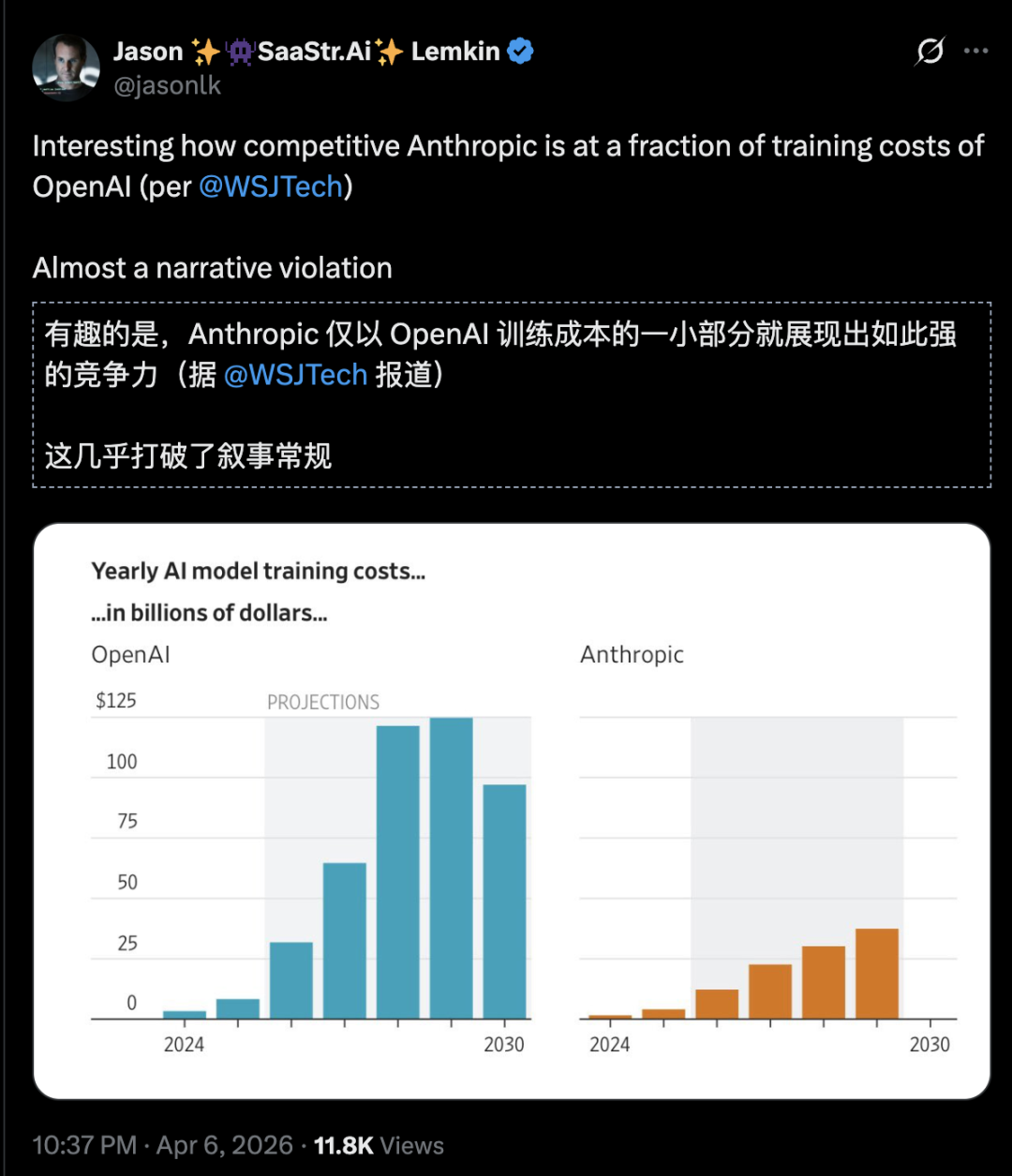
What is even more shocking is that Anthropic’s way of making money is more efficient, and its model training costs are only one-fourth of OpenAI’s.
In terms of capital efficiency and cost control, Anthropic is winning with a smaller budget and putting pressure on its rival.

Dario Amodei’s Revenge
This is the most exciting revenge story in Silicon Valley business history.
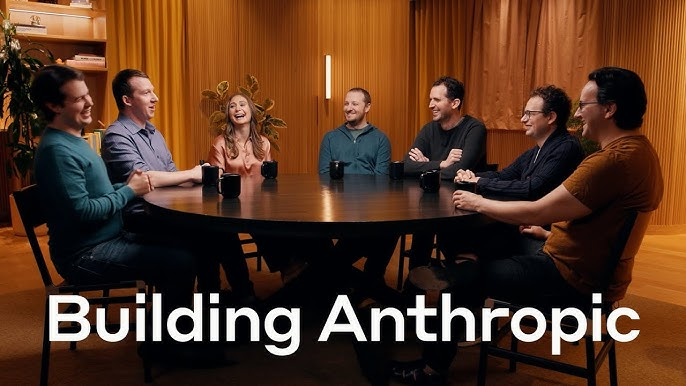
In 2021, Dario Amodei, who was in charge of research at OpenAI, left because he disagreed with the company’s direction on commercialization and safety. He founded Anthropic with his sister Daniela, also a former OpenAI researcher.
At the time, the industry laughed at them, calling them “traitors who killed their own master” and “the rebels.”
No one thought they would go this far.
Now, with $30 billion in annual revenue, they have given the best answer.
The key to their success lies in one thing: precise focus on the B-end enterprise market.
 best free ai porn
B-End Enterprise vs C-End Consumer
By April 2026, among 1,000 enterprise clients, each paying Anthropic over $100 million per year, were names like Bridgewater, Salesforce, and JPMorgan. These are not just investors, but real paying users.
Products like Claude Code have become key tools for enterprise workflows, helping with code writing, intelligent analysis, and automation, directly embedded into the work processes of major banks. Once enterprise customers adopt it, the switching cost is extremely high, which means stable long-term revenue.
Why is Anthropic winning here?
Because it chose a completely different path: signing large enterprise contracts and providing customized AI solutions for industries like finance, healthcare, cumshot generator and legal services. Enterprise clients care about one thing: which AI is more reliable.
Anthropic’s Constitutional AI technology, self-developed research capabilities, and the CTO’s strict hardware procurement list all add to its trustworthiness.
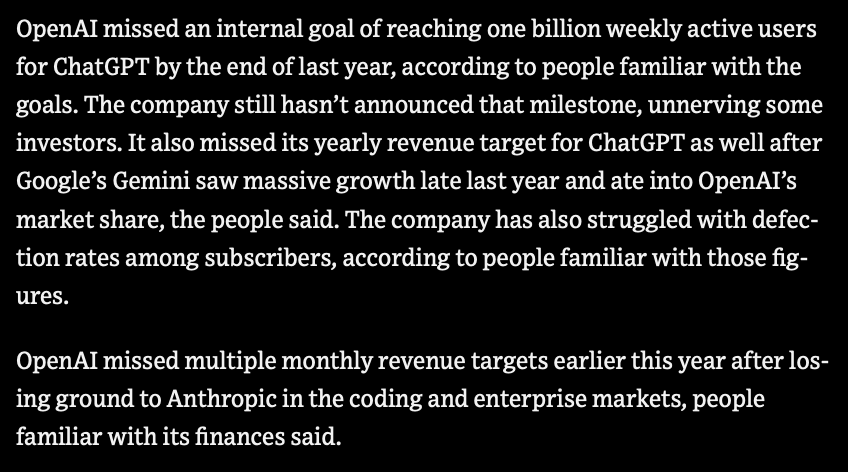
At the same time, the WSJ leaked an internal document showing that ChatGPT failed to reach its internal target of 1 billion active users, and revenue growth in recent months has fallen short of expectations.
 celebrity ai nudes
The Power Struggle Inside OpenAI
Some say this article is like pouring salt on a wound. But the internal problems at OpenAI are even worse than what is written here.
Just as Anthropic was celebrating its victory, the WSJ and The Information dropped another bombshell: a power struggle has erupted inside OpenAI.
The CFO is about to leave.
According to people close to the company, CFO Sarah Friar’s relationship with the team has already broken down.
Friar, who came from Square and Nextdoor, was originally brought in to help OpenAI complete a historic $122 billion valuation funding round and a $1 billion IPO plan. She was seen as the “adult in the room” who could bring order to the chaos.
But inside the company, Friar showed a strong desire to control financial planning. She demanded more say over the company’s spending, which caused conflict with the CEO. Insiders said she was “too aggressive in meetings.”
It is reported that the employment contract has not been renewed. Revenue failed to meet targets, OpenAI’s cloud service provider did not renew the contract, and the $60 billion stock compensation plan was pushed out. She has been gradually removed from key decision-making processes.
IPO on Hold
What makes it worse is that just as the power struggle was getting more intense, Friar privately told the team that OpenAI’s financial system was “too transparent,” and that it was not ready to face the scrutiny of the public market.
In other words, the IPO plan has been shelved. The official announcement may come soon, but the result is already clear: the $122 billion valuation, the white-hot AI battle, and the 1% stock option promise to Elon Musk all look increasingly uncertain.
The market has already made its judgment. OpenAI’s valuation has been marked down by investors.
What Does This Mean
Spending the same $1 billion, Anthropic’s training results are comparable to OpenAI’s $4 billion. This means its cost is one-fourth, and its profit margin, cash flow, and growth space are all several times better.
 Profitability: Who Will Reach Break-Even First
Another key difference is profitability: Anthropic is expected to reach break-even by 2027, while OpenAI’s timeline has been pushed back to 2030.
Three years. In the AI industry, where a trillion-dollar market can change overnight, three years is an eternity. It could mean the difference between a river and an ocean, or between a small stream and a great lake.
Right now, the situation is very clear.
Anthropic just signed a chip deal with Broadcom to build its own AI chip supply chain. OpenAI’s new round of funding is being delayed because investors are questioning whether it can sustain its growth.
Internal fears are growing. OpenAI’s chief revenue officer has privately told employees that Anthropic’s growth rate is something they “must face,” and that the market gap is “currently irreversible.”
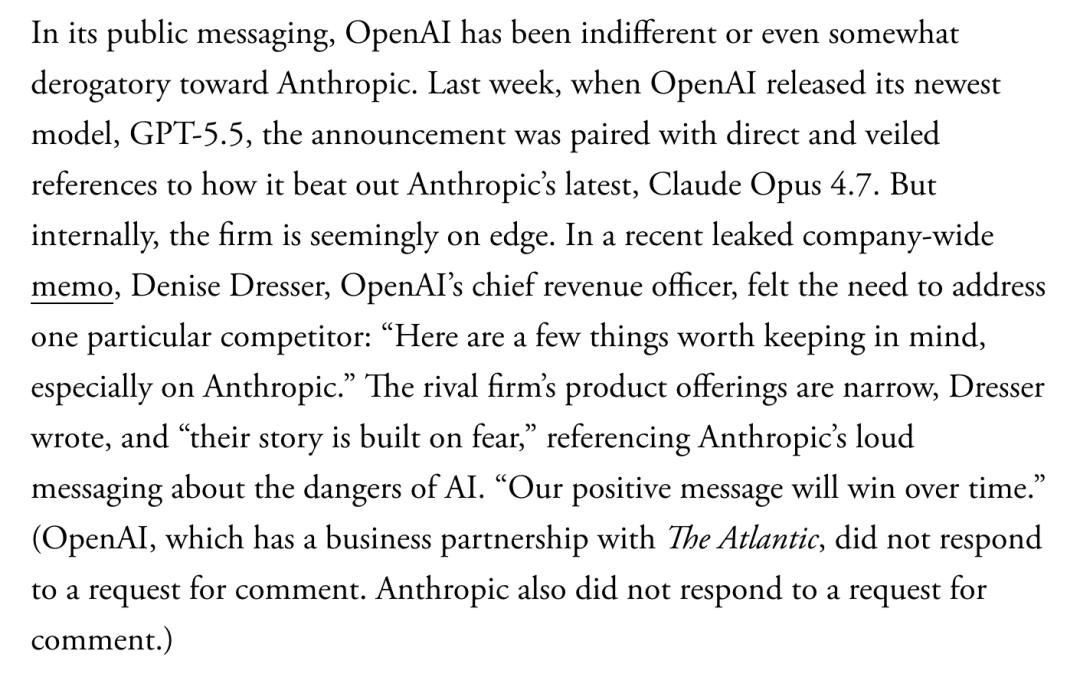
Another sign is that OpenAI is responding by shifting the focus of products like Sora entirely to the B-end market, and launching products like Claude Code to keep up with the competition.
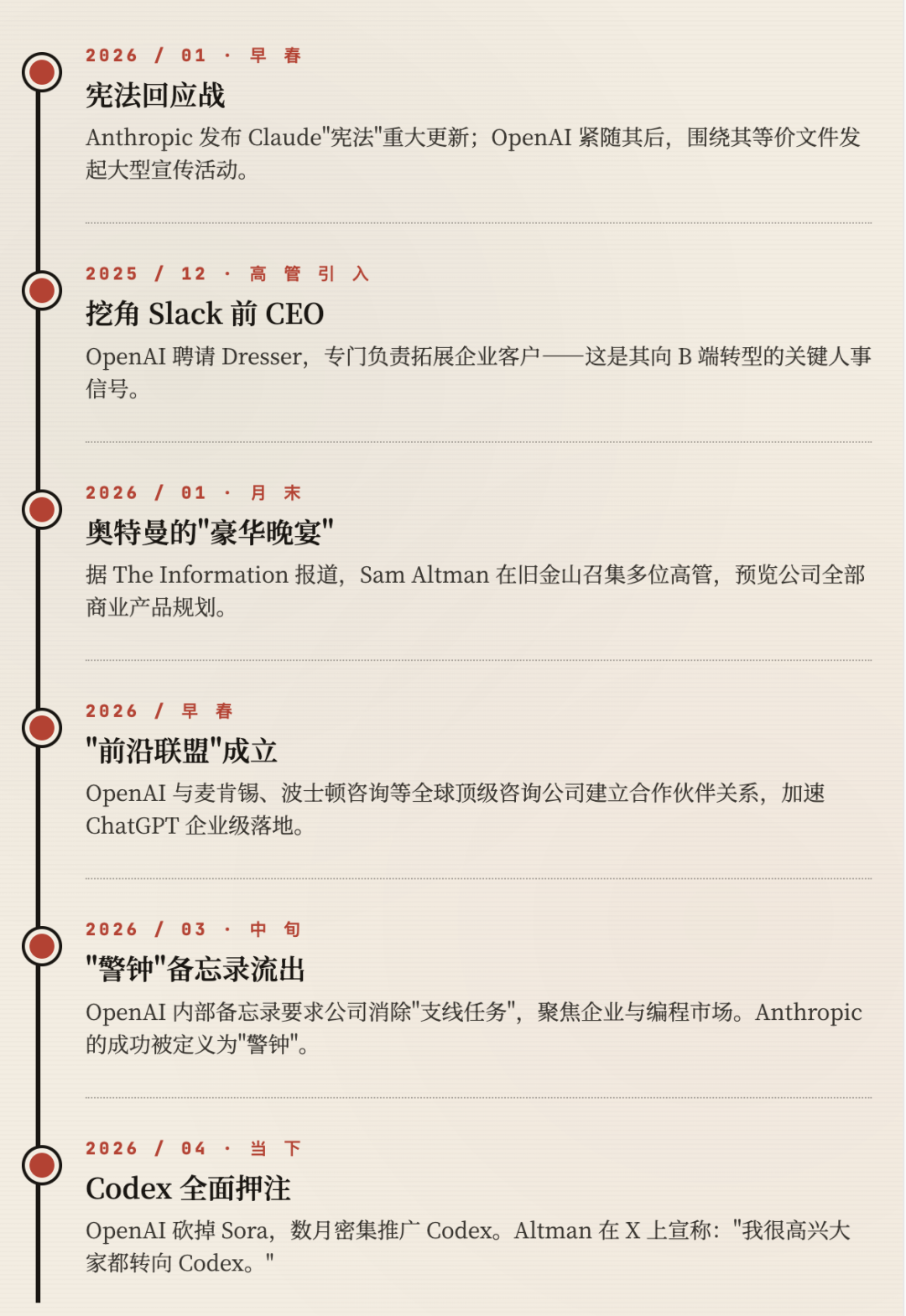
But if you think about it, this strategic shift actually proves one thing: the two companies’ paths are opposite, and Anthropic was right from the start.
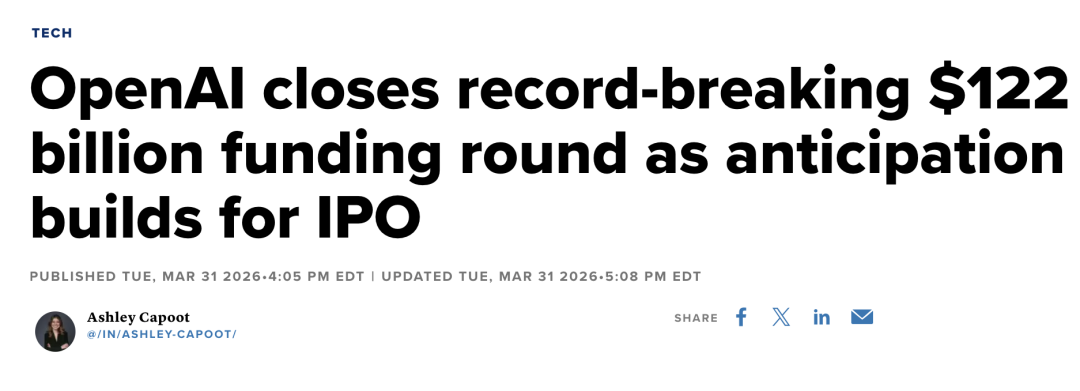
The $122 Billion Valuation Is in Danger
A valuation cut means this battle is entering a new phase.
Just a few months ago, OpenAI completed a new round of funding with a valuation as high as $122 billion, and the actual amount raised was close to $80 billion.
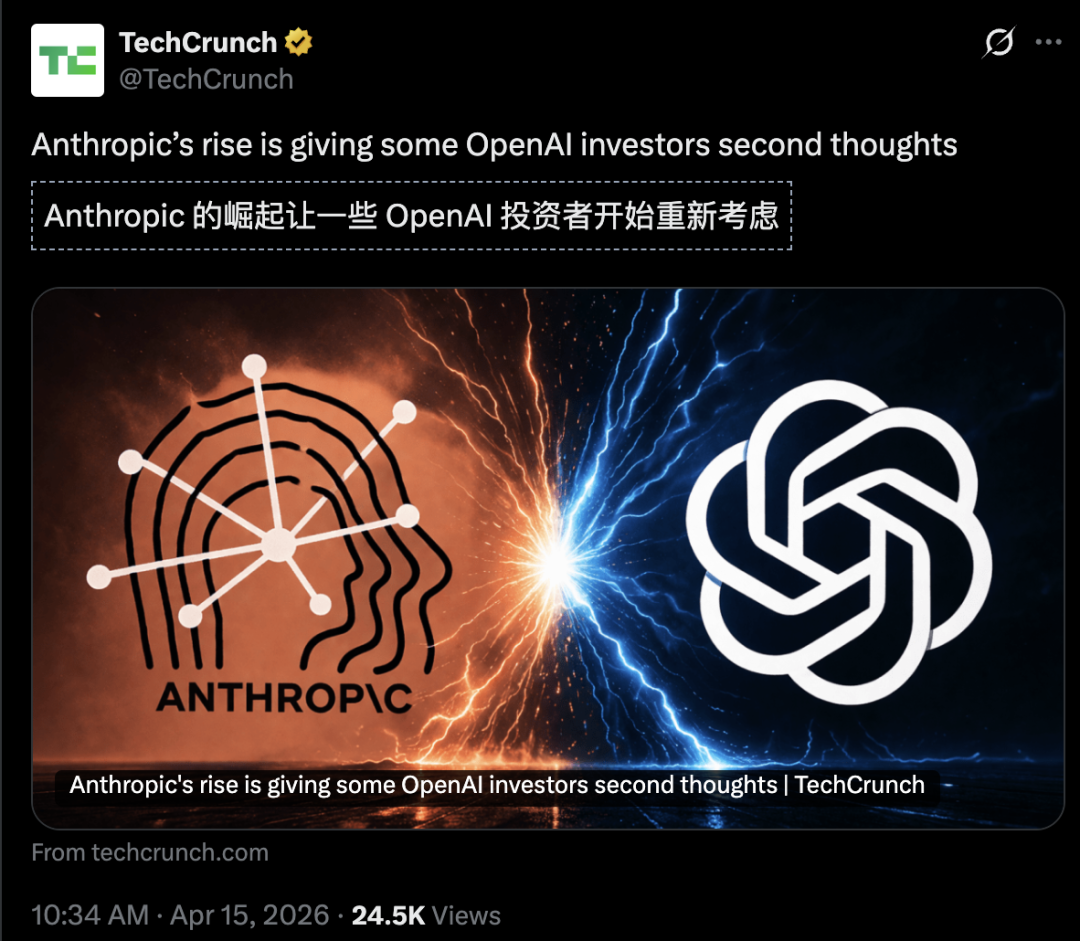
The money has been spent, but the results are not there. The WSJ report is like a piece of paper that tears away the facade.
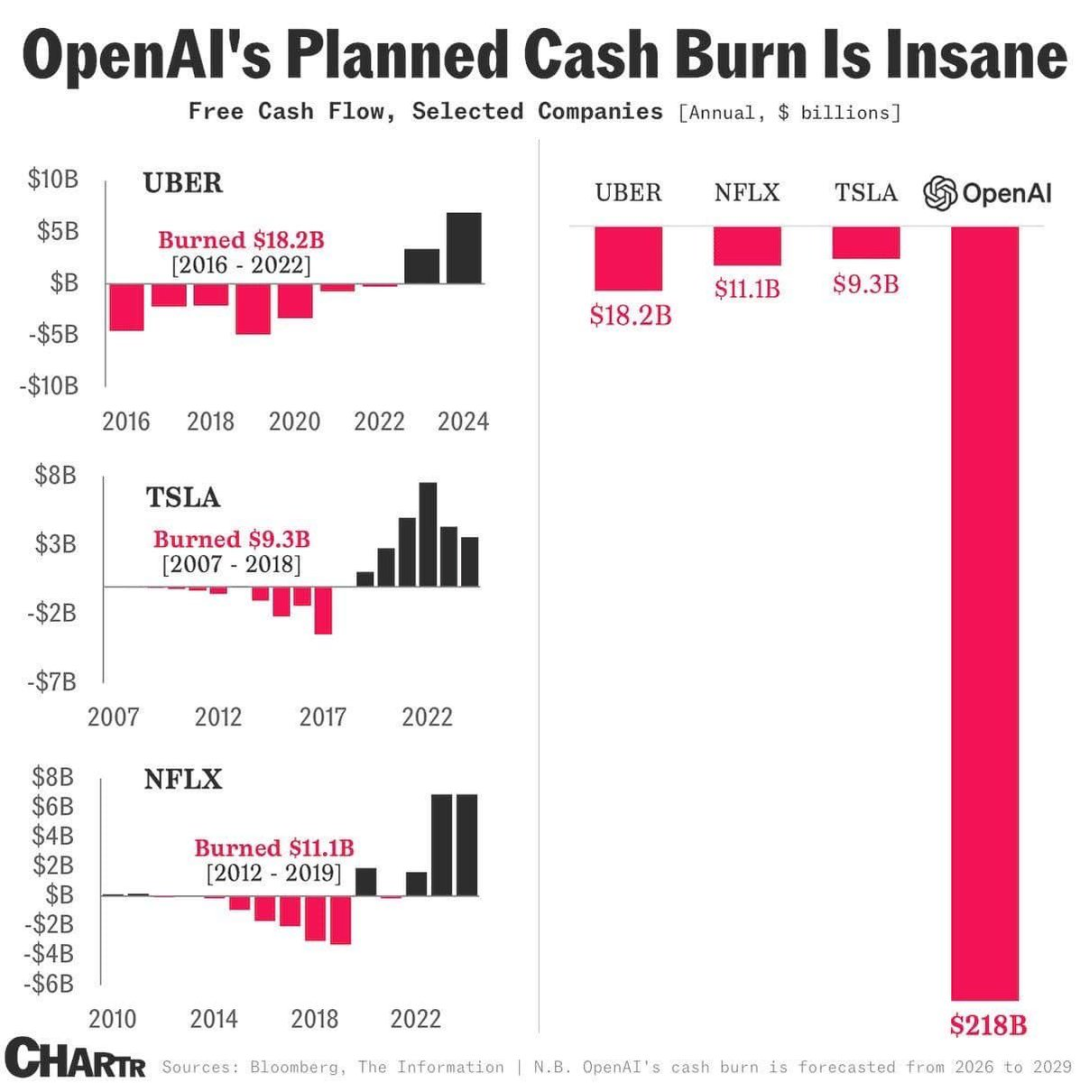
OpenAI’s current ARR is about $24 billion, but operating costs are expected to exceed $20 billion. Cash flow is already under heavy pressure.
What scares OpenAI’s leadership even more is a clause in the investment agreement: a massive $60 billion stock compensation.
$122 billion plus $60 billion, this is a bitter pill that must be swallowed.
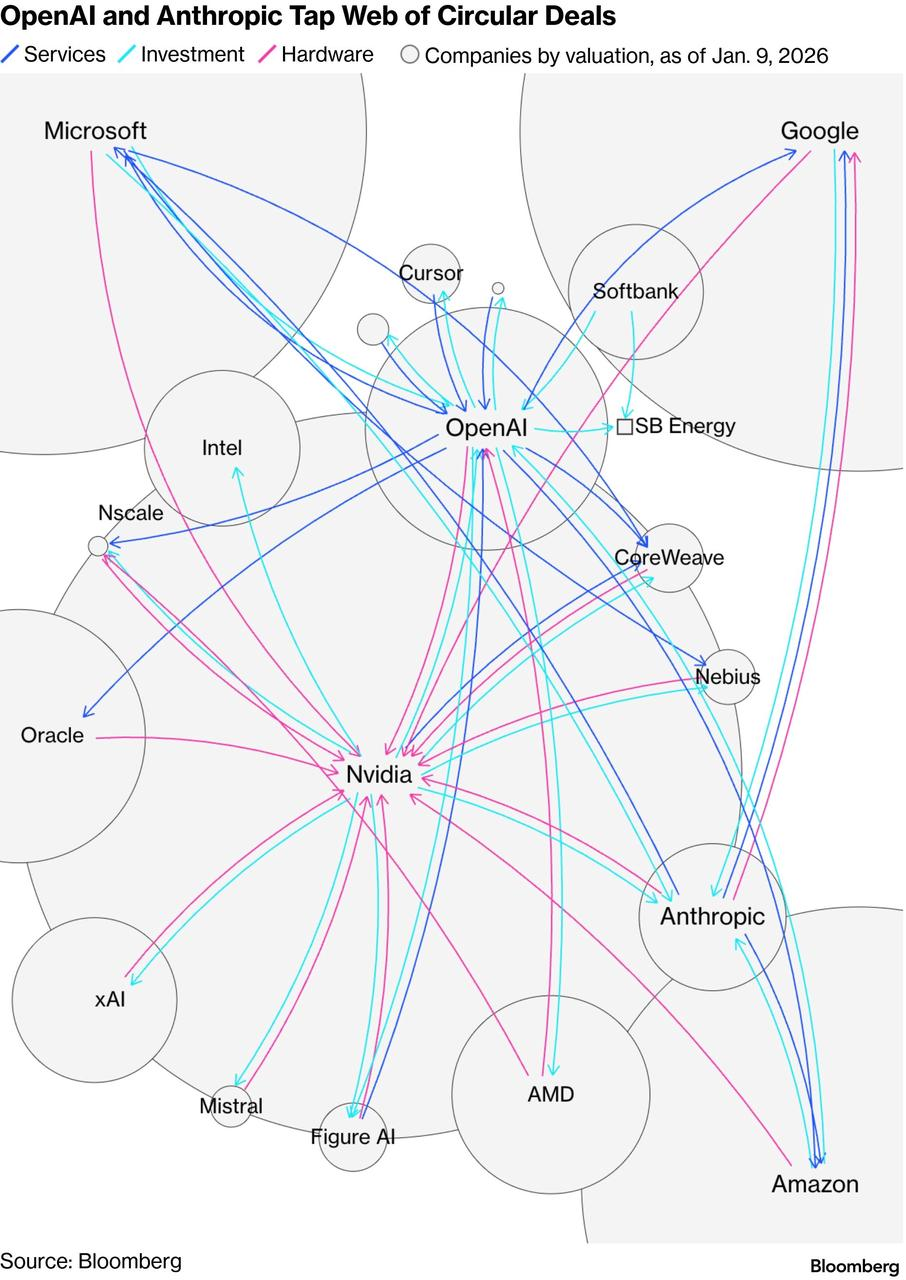
This creates a terrible cycle: investors give money to OpenAI, OpenAI uses the money to buy chips, chips are used to train models, models must keep making money to support user growth, and to maintain growth OpenAI needs to raise more money.
OpenAI’s high revenue is built on record-breaking losses. Anthropic’s revenue calculation method is more conservative. No one has released the exact numbers, but the fact is that Anthropic is indeed making money.
This is also OpenAI’s biggest weakness.
As CFO Sarah Friar leaves the company at the worst possible time, from an investor’s perspective, it is like the captain jumping ship when the ship is about to sink. A $300 billion valuation target that was once within reach now looks increasingly out of reach.
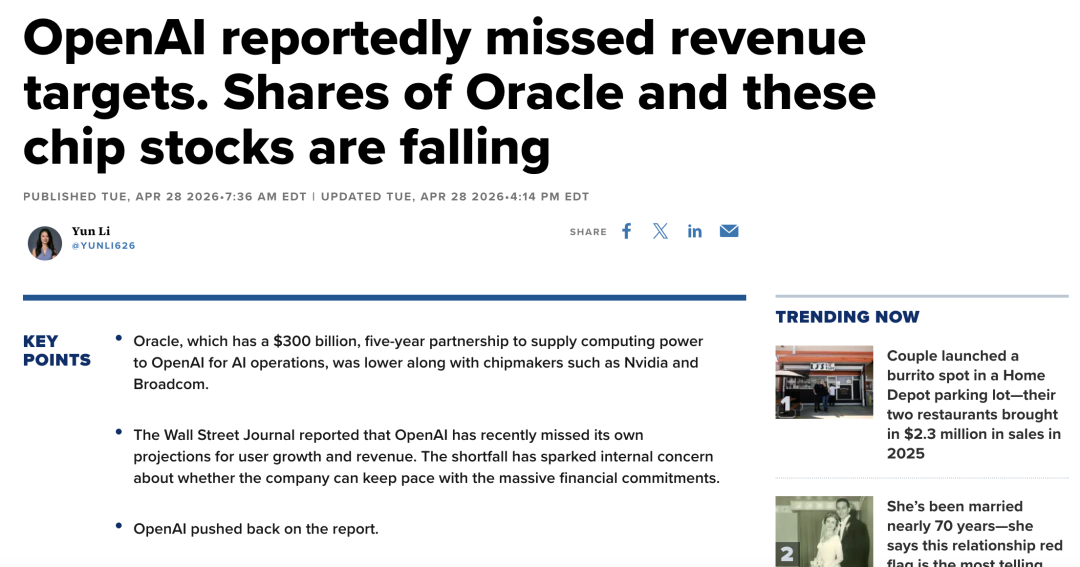
The Market Reaction Is Brutal
The market’s reaction to all of this is brutally honest.
Anthropic’s secondary market valuation is approaching $1 trillion.
At the same time, OpenAI’s major investors have started to waver. Investment banks have begun to quietly lower OpenAI’s valuation targets.
Oracle and CoreWeave, two companies that had signed long-term contracts with OpenAI, have seen their stock prices fall sharply.
What this valuation battle really means is not about who wins or loses, but about which business model the AI industry will choose.
OpenAI chose the “consumer traffic plus enterprise” model, a broad approach. Anthropic chose the “product value plus scale effect plus enterprise contracts” model, a deep approach.
Between these two paths, what is actually being tested is a core question for the AI industry: can model companies survive on their own, or must they rely on the cash flow of big tech companies to subsidize them?
Anthropic’s $30 billion in revenue has already given a clear answer. At least for now, the market has chosen the deep approach.
 One-Fourth of the Cost
In 2021, when Dario Amodei left OpenAI, almost no one was optimistic about him.
Four years later, Anthropic has become the most watched company in the AI industry.
Some people ask a question: if we could go back to 2021, could we have stopped this “traitor” from leaving?
The answer might be: even if we had stopped him, it would not have mattered. Anthropic’s success is not because of one person’s talent, but because it chose a different path from OpenAI from the very beginning.
The AI battle is far from over. OpenAI still has the GPT-5 card to play, Microsoft is still a strong backer, and the global base of AI users and developer rights is still tilted in its favor.
But what is clear is that the momentum has shifted. It needs to respond to Musk’s lawsuit, fix internal management problems, and deal with investors’ doubts.
This epic AI battle is entering a new act. The curtain has just opened. Who will have the last laugh?
One thing is certain: when OpenAI is struggling, the war has already officially begun.